PRIVATE BRIEFING — AUTOMATION PORTFOLIO
The Automation Portfolio: 15 AI Systems That Turn Operational Overload Into Strategic Leverage
You have an AI problem — but it's probably not the one you think.
It's not access. Ninety-four percent of digital marketing professionals are already using AI tools. The real problem is architecture. Most operators are running sophisticated technology through unsophisticated workflows — and getting generic, unreliable, and unscalable results in return.
This portfolio documents something different.
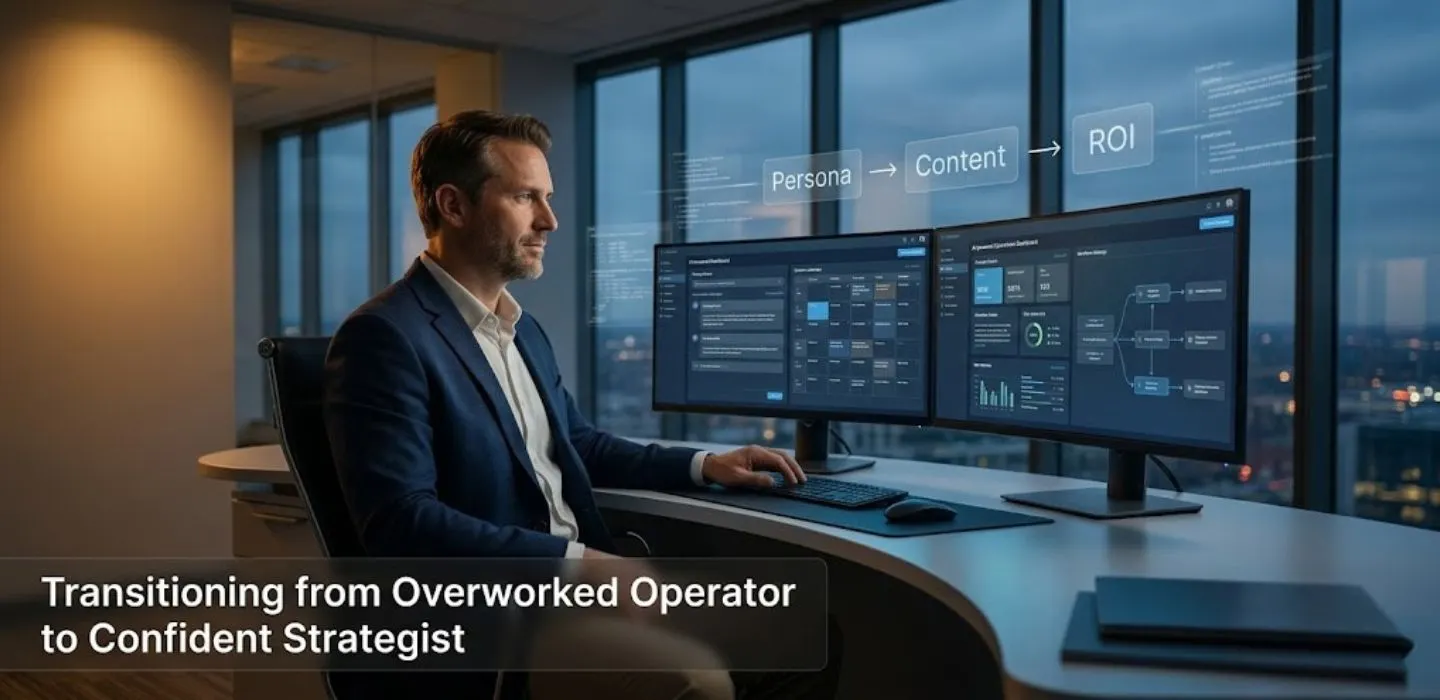
Built from 20+ years of enterprise technology leadership, including CTO roles and university-level IT instruction, the Expert AI Prompts Automation Portfolio is a structured collection of 15 advanced AI systems, Standard Operating Procedures, and prompt-driven frameworks. These are not templates. They are engineered architectures — built to reverse-engineer business operations, eliminate administrative overload, and produce expert-level outputs at scale.
The research is unambiguous: businesses deploying structured AI frameworks are reporting 300% average marketing and sales ROI alongside a 40% reduction in operational costs. The gap between AI users and AI operators is widening every quarter. This portfolio sits on the strategic side of that divide.
This document is shared selectively — with senior operators, founders, and team leads who already understand that AI is a baseline, and are now asking a more sophisticated question: How do I architect it to actually compound? If that framing resonates, what follows will be directly actionable.
What's Inside: 15 Strategic AI Systems
Each system is a complete operational framework — with deliverables, SOPs, and quantified resource savings.
01 — The Customer-Centric Business Blueprint Architecture
Reverse-engineer your entire operation from a single psycho-demographic customer profile.
Stop building products and workflows in isolation from the market. This foundational system uses chained AI prompts to construct a deep customer archetype — then maps your internal roles, tasks, and touchpoints directly to that profile. Result: complete alignment between what the market wants and how your business delivers it.
Time saved: 50–60 hours per planning cycle | Cost avoided: $15,000–$25,000 in consulting fees
02 — AI ROI Mastery & Enterprise Performance Quantification
Turn AI productivity into board-level financial proof.
The single biggest blocker to scaling AI investment is the inability to prove its financial impact. This framework standardises measurement of time reclaimed, revenue attributed, and cost displaced — producing the mathematical evidence required to justify and accelerate further deployment.
Time saved: 8–12 hours per reporting period | Efficiency gain: 10–15% systemic improvement
03 — The 150-Asset Content Creation Engine & Batch Processing
From one core theme to 150 platform-optimised assets in a single session.
A prompt multiplier workflow that extrapolates a single business theme across blogs, social posts, email sequences, and video scripts — all mapped to specific customer journey stages. Not volume for volume's sake: each asset is intelligently targeted and search-optimised.
Time saved: 180–200 hours per quarter | Cost reduced: $4,000–$8,000 monthly in content production
04 — High-Velocity B2B Demand Generation Architecture
Scale outbound sales without scaling headcount.
With 80% of B2B engagements now digital, personalised outreach at scale is the competitive moat. This system automates prospect research, hyper-personalised outbound emails, and multi-stage follow-up sequences — improving direct reply rates by 20–50% and generating up to 451% more qualified leads.
Time saved: 15–20 hours per sales rep per week | Margin expansion: 12% average
05 — Advanced Prompt Debugging & Output Iteration Protocol
Stop accepting mediocre AI output.
Generic, hallucinated, or misaligned outputs are not an AI problem — they are a prompt architecture problem. This SOP provides a rigorous diagnostic framework: isolate failure variables, apply precise syntactic corrections, and transform daily AI interactions from unpredictable to engineered.
Time saved: 10–12 hours per team weekly | Brand equity: protected from low-quality automated content
06 — Privacy-First Local AI Deployment (GPT4All)
Enterprise data sovereignty — no cloud exposure required.
For organisations with NDAs, sensitive client data, or proprietary IP, public API endpoints are a compliance liability. This technical guide details exactly how to run advanced LLMs locally using GPT4All — full capability, zero data exposure, no recurring API costs.
Time saved: 3–4 weeks of legal review bypassed | Cost: recurring API expenditure eliminated
07 — Omnichannel Search Visibility & GEO Blueprint
SEO is necessary. Generative Engine Optimisation (GEO) is the new moat.
Ninety percent of digital businesses are concerned about LLMs eroding organic search visibility. This system goes beyond traditional SEO into GEO — using AI to cluster intent, generate JSON-LD schema markup, and ensure content is perfectly structured to be cited by Perplexity, Google AI Overviews, and emerging AI search engines.
Time saved: Multi-day manual processes compressed to 2 hours | Cost saved: $2,000–$5,000 per optimisation cycle
08 — AI-Powered Lead Magnet & Conversion Engine
Full funnel architecture — from lead magnet concept to email sequence — in days, not weeks.
A chained prompt system that takes your customer persona and generates the complete funnel infrastructure: high-value digital asset, landing page copy, ad creative variants, and a three-stage email onboarding sequence. What typically requires a cross-departmental 4–6 week effort is systematised into 3–5 days.
Time saved: 4–6 week project to 3–5 days | Cost reduced: 60% per funnel build
09 — Emotion-Driven Productivity & Energy Management
The highest-leverage productivity shift available to an executive.
Traditional task management systems fail under executive pressure because they ignore cognitive bandwidth. This framework uses AI to align complex tasks with your current mental state — generating a personalised Feeling-to-Task Matrix that prevents burnout and maximises deep-work output.
Time reclaimed: 5–8 hours weekly | Value: protection of the organisation's highest-leverage strategic asset — you
10 — Executive LinkedIn Optimisation & Networking Protocol
LinkedIn is your highest-ROI B2B channel. Most executives are using it at 10% capacity.
This system reconstructs your entire LinkedIn presence algorithmically — profile, thought-leadership content calendar, connection request frameworks, and Boolean prospect search strings. LinkedIn management drops from 90 minutes of daily friction to 15 minutes of strategic direction.
Time saved: 6+ hours weekly | Revenue impact: organic inbound demand generation replacing paid InMail spend
11 — Strategic AI Prompt Chaining & Visual Workflows
The architecture that separates AI operators from AI strategists.
Single prompts are tactically limited. This framework demonstrates exactly how to link sequential AI interactions — where each output defines the context and constraints of the next stage — enabling the automated execution of genuinely complex deliverables: training programmes, product launches, full operational manuals.
Time saved: 70% acceleration on multi-variable projects | Leverage: one operator producing the output of a project management team
12 — Cross-Niche Prompt Multiplier for Scalability
Your best prompt architecture is worth 10x if you can replicate it across industries.
A lateral scaling methodology for agencies, consultants, and service providers. By identifying the structural logic inside a successful prompt, a meta-prompt instantly recalibrates industry variables, jargon, and buyer pain points across 10+ sectors simultaneously — near-zero marginal cost of replication.
Time saved: Hundreds of hours of vertical market research eliminated | ROI: single IP asset monetised across multiple industries
13 — Advanced Image Prompt Engineering Framework
Visual AI outputs are erratic by default. This system makes them deterministic.
A 3-stage generative visual protocol that integrates your brand identity, customer persona, and campaign objectives directly into image prompt syntax — dictating lighting, camera angle, style, and composition with precision. Produces bulk, brand-consistent marketing assets without stock photography or designer iteration cycles.
Time saved: Instantaneous high-fidelity asset creation | Cost reduced: significant reduction in stock photography and freelance design expenditure
14 — Agentic AI & Virtual Assistant Integration
The frontier: AI that executes, not just advises.
Autonomous AI agents that handle procurement evaluation, supplier routing, prospect research, and initial sales drafting — continuously, without human prompting. Case studies from major consulting deployments project over €1.3 billion in savings across five-year horizons. This strategy details exactly how to deploy that infrastructure at an operational level.
Time saved: 60% reduction in routine B2B task execution | Enterprise impact: transformative cost reduction at scale
15 — AI-Enabled Onboarding & Team Training Architecture
Cut sales training time in half. Deploy new revenue generators weeks earlier.
In high-velocity sales environments, onboarding is a senior management tax. This system uses prompt-driven frameworks to synthesise complex corporate knowledge into interactive, role-specific training modules — complete with AI-driven objection simulators and competency tracking rubrics. Average result: 50% reduction in required sales training time.
Time saved: 50% of training timeline | Revenue impact: new sales reps generating closed-won revenue weeks to months earlier
This Is Not a Productivity Hack. It's an Operational Redesign.
The 15 systems in this portfolio are not about doing existing tasks faster. They are about identifying the bottlenecks in your current operation — the places where high-leverage talent is locked in administrative friction — and systematically eliminating them.
The organisations that will define this decade are not the ones with the largest AI budgets. They are the ones who engineered their operations first. That window is still open. But it is narrowing.
The full portfolio — including all 15 system architectures, deliverables specifications, and resource optimisation projections — is available in the document below.
Access the Full Automation Portfolio
A private briefing for strategic operators. No opt-in. No paywall.
Shared directly because the fit matters more than the funnel.
15 systems. 18 pages. Immediately actionable.
Questions on implementation? Connect directly: [email protected]