Coaching Business Scaling: A Guide to Automating Client Follow-Ups with AI

Introduction
For many independent coaches and consultants, success is a double-edged sword. You spend years honing your expertise and building a reputation. Finally, the referrals start flowing in, and your calendar fills up. But then, you hit a wall. You are so busy delivering results for current clients that you stop nurturing the next wave of clients. Your revenue roller-coasters, and you find yourself working 14-hour days just to maintain the status quo.
This was the exact position Sarah, a leadership performance coach, found herself in six months ago. She was talented, driven, and completely burned out.
Sarah represents a challenge familiar to almost every ambitious solopreneur: the "Time vs. Money" paradox. She wanted to grow, but her business model relied entirely on her manual input for every email, every follow-up, and every piece of content. She knew she needed to focus on coaching business scaling, but she didn't have the budget to hire a marketing agency or a full-time copywriter.
This case study details exactly how Sarah broke through her income ceiling—not by working harder, but by automating her client nurture sequences using expert-level AI prompts. In doing so, she doubled her revenue in 90 days while reclaiming 12 hours a week.
Phase 1: Identifying the Bottleneck
Before Sarah could fix her business, she had to admit where it was broken. Like many business owners, Sarah prided herself on the "personal touch." She believed that every email sent to a prospect had to be manually typed by her to be authentic.
The Leaky Bucket
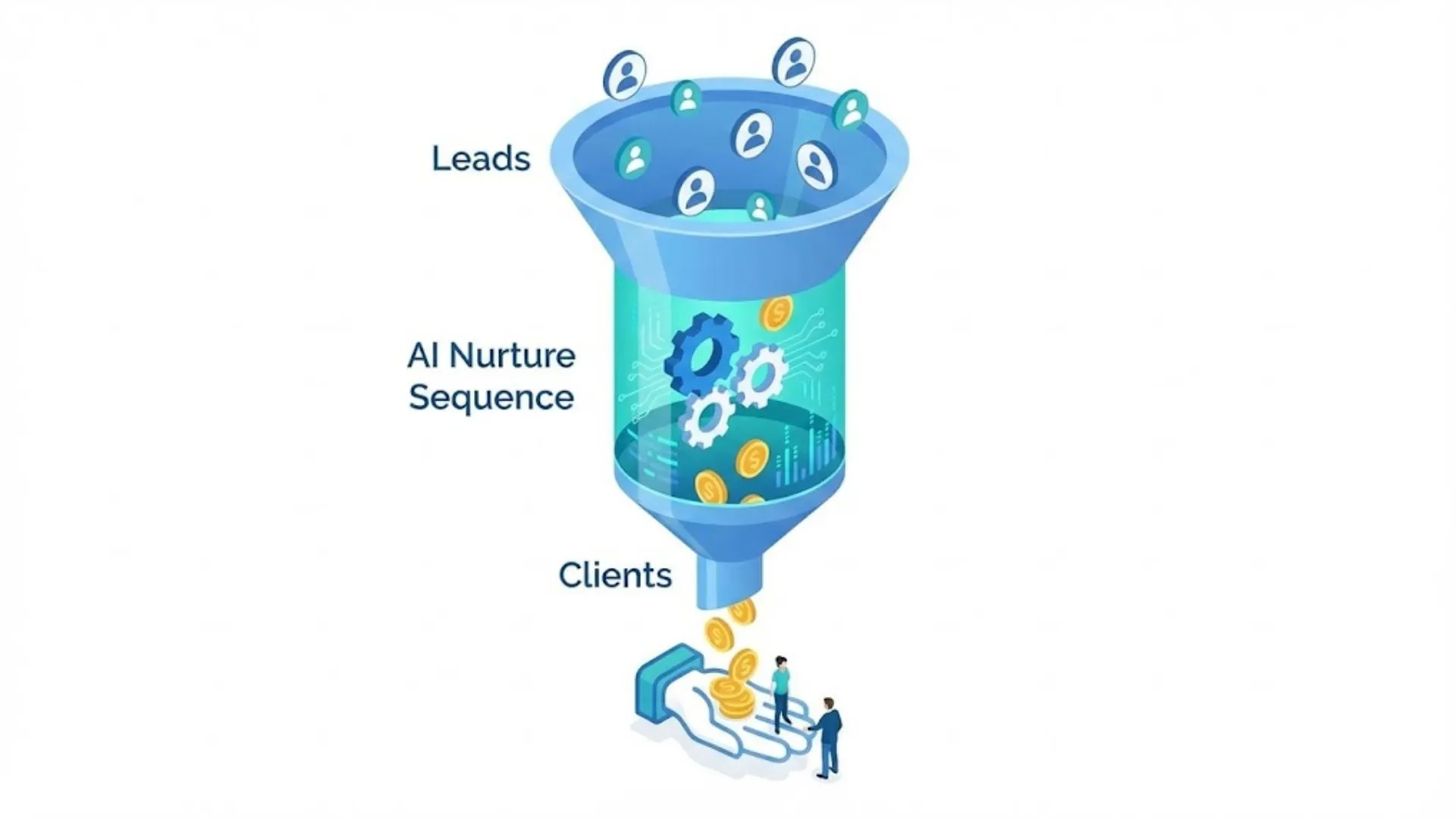
Sarah’s lead generation wasn’t the problem. She had steady traffic from LinkedIn and local networking. The problem was the "leaky bucket" in the middle of her funnel.
Delayed Responses: If a lead inquired on a Tuesday, Sarah often couldn't reply with a thoughtful proposal until Friday. By then, the lead had cooled off or moved on.
Inconsistent Follow-up: If a prospect didn't buy immediately, they fell into a black hole. Sarah simply didn't have the mental bandwidth to track and nurture leads who weren't ready to buy right now.
Content Dry Spells: Her newsletter, a key driver of authority, was sporadic at best. Weeks would pass without communication, weakening her brand presence.
The Time Audit
We asked Sarah to track her time for one week. The results were sobering. She was spending approximately 15 hours a week writing emails, drafting proposals, and trying to come up with "clever" ways to check in on leads. That was 15 hours not spent coaching (billing) or strategizing.
The Skepticism
When we suggested automating these sequences using AI, Sarah’s immediate reaction was resistance.
"I can't use AI. My clients hire me for my specific voice and expertise. If I send them generic robot text, I'll lose all credibility."
This is a valid fear. Most generic AI outputs are fluffy, repetitive, and obviously machine-generated. However, Sarah’s objection wasn’t about automation itself; it was about quality. She didn't realize that with the right strategic inputs—expert-level prompts—AI could replicate her tone, structure her expertise, and deliver content that felt indistinguishable from her best writing.
To scale, Sarah didn't need to clone herself. She needed to clone her voice.
Phase 2: The Strategic Pivot (Systemization)
The transition from an overworked operator to a scalable business owner requires a fundamental shift in mindset. Sarah had to stop viewing email drafting as "her job" and start viewing it as a "system's job."
The Mindset Shift
The goal wasn't to remove Sarah from the equation. The goal was to front-load her effort. Instead of writing the same "checking in" email 50 times a year, she would craft one high-performing sequence that would run 5,000 times automatically. This is the cornerstone of coaching business scaling: building assets that work while you sleep.
The Tool Selection
Sarah had tried generic ChatGPT prompts before, resulting in cringeworthy emails starting with "I hope this email finds you well." To make this work, she needed a different approach. She needed prompts that understood:
1. Context: The specific pain points of executive leadership.
2. Tone: Professional, authoritative, yet empathetic.
3. Outcome: Moving the reader toward a specific decision.
She utilized Expert AI Prompts packs designed for consulting and coaching. These weren't simple "write an email" commands; they were structured frameworks that forced the AI to act as a senior copywriter, using proven persuasion psychology.

The "Digital Twin" Strategy
We established a "Brand Voice" protocol. Before generating any content, we used a specific prompt to analyze Sarah’s past successful emails. The AI identified her sentence structure, her preferred vocabulary, and her formatting style. We then fed this "voice profile" into every subsequent prompt. The result? Drafts that sounded 90% like Sarah on the first try, requiring only minor polishing.
Phase 3: The Execution (The 3-Step Nurture Build)
With the strategy set, Sarah implemented three distinct automated sequences to cover the entire client journey.
Sequence A: The "Instant Authority" Welcome
The most critical moment in a coaching relationship is right after a lead expresses interest. Previously, Sarah’s leads got a generic "Thanks, I'll be in touch" message.
We replaced this with a 3-email "Welcome Series" generated in under 30 minutes using the Expert AI Prompts Email Mastery Pack.
Email 1 (Immediate): Delivers a high-value resource (a PDF checklist Sarah already had but rarely sent). The prompt ensured the copy framed this resource as a "game-changer" rather than just a file attachment.
Email 2 (24 Hours Later): A "Manifesto" email. This email detailed Sarah’s unique coaching philosophy. The prompt used was: "Act as a contrarian thought leader. Write an email challenging the common industry myth that [X], and explain why my approach of [Y] yields better results."
Email 3 (48 Hours Later): A soft call-to-action inviting a discovery call, focused entirely on the prospect's potential gains, not Sarah’s features.
The Impact:
By automating this, every new lead received immediate value and deep indoctrination into Sarah’s methodology before she even spoke to them. They showed up to sales calls already respecting her authority, reducing the need for her to "sell" herself.
Sequence B: The "Value-First" Education Loop
Once the welcome sequence finished, leads were moved into a long-term nurture sequence. This is where most coaching businesses die—the "newsletter burnout." Sarah knew she couldn't sustain writing a fresh, high-impact article every week from scratch.
To solve this, we used a "Content Repurposing" workflow powered by AI prompts.
The Workflow:
1. Core Concept: Sarah would record a 3-minute voice note on her phone about a client win or a realization she had during a session.
2. The Prompt: She fed the transcript into an AI tool with a specific prompt: "Act as a senior editor. Take this rough transcript and structure it into a 400-word educational email. Use a 'Hook-Story-Lesson' framework. The tone should be conversational but insightful. End with a reflective question."
3. The Scale: From that same transcript, she used a second prompt to generate three LinkedIn posts and a short script for a video.
The Result:
Sarah went from dreading her Sunday night writing sessions to batch-creating a month’s worth of content in two hours. Her list began receiving consistent, high-value insights every Tuesday at 10 AM. This consistency kept her "top of mind." When a prospect’s budget finally opened up three months later, Sarah was the only coach they thought of because she had been showing up in their inbox weekly with value—not sales pitches.
Sequence C: The "Soft-Touch" Re-engagement
The final piece of the automation puzzle addressed the "Ghost Graveyard"—the list of leads who had inquired months ago but never bought. Sarah had over 200 such contacts sitting dormant. Reaching out manually felt awkward and desperate.
We deployed a "9-Word Email" strategy, scaled via automation.
The Strategy:
The goal is to restart a conversation, not make a sale. The prompt used was designed to strip away marketing fluff and simulate a quick, personal check-in sent from a mobile phone.
The Prompt Structure:
"Draft a re-engagement email for a cold lead named [Name]. The context is they inquired about [Service] 3 months ago but ghosted. The goal is to see if they are still facing the problem. Keep it under 50 words. No HTML, no subject line 'tricks.' Tone: Casual curiosity."
The Output:
Subject: Still looking?
"Hi [Name], are you still looking for help with your team leadership structure, or have you put that project on hold for now? - Sarah"
It seems simple, but automating this to go out to cold leads in batches changed everything. Because the AI stripped away the "marketing speak," the response rate skyrocketed. People replied apologizing for the delay, updating her on their status, and often booking calls immediately. It turned a dead list into a goldmine, all without Sarah typing a single word.
Phase 4: The Results (Quantitative & Qualitative)
The transition from manual hustling to automated, AI-assisted nurturing took Sarah approximately two weeks to set up. The results, however, were immediate and compounding.
The Numbers
Revenue Doubled: Within 90 days of activating these sequences, Sarah’s monthly revenue jumped from her consistent $8k ceiling to $16.5k. This wasn't just from new leads; 40% of this revenue came from the "Ghost Graveyard" re-engagement sequence—money that was previously sitting dormant in her list.
Time Reclaimed: By eliminating manual email drafting and follow-ups, Sarah saved roughly 12 hours a week. She reinvested this time into high-ticket group coaching, further increasing her income potential.
Conversion Rates: Her "Welcome Sequence" increased her lead-to-call booking rate by 35%. Prospects were showing up to calls more educated and less skeptical.
The Qualitative Wins
Beyond the bank account, the biggest shift was psychological. Sarah moved from a state of reactive panic to proactive confidence.
Consistency: Her brand no longer suffered when she got busy or took a sick day. The machine kept running.
Authority: Clients began complimenting her on her "prolific" writing, unaware that she was spending less time writing than ever before.
Scalability: For the first time, Sarah felt she could handle 50 new leads a month without drowning.
Conclusion
The myth of the "starving artist" or the "overworked coach" is perpetuated by a lack of systems, not a lack of talent. As we saw with Sarah, the barrier to coaching business scaling wasn't her ability to coach; it was her inability to clone her communications.
Many entrepreneurs like Alex Rivers hesitate to adopt AI because they fear losing their soul. But as this case study demonstrates, the right AI strategy doesn't replace your personality—it amplifies it. It clears the clutter of administrative busywork, allowing the real value (you) to shine through more consistently to more people.
You do not need a five-person marketing team to compete with the big agencies. You do not need to work 80 hours a week to double your revenue. You simply need to stop starting from a blank page.
By leveraging expert-level prompts, you can build a nurture engine that works as hard as you do, turning strangers into clients while you focus on what you do best: changing lives.
Stop Spinning Wheels — Start Winning Clients
Ready to implement the exact systems Sarah used? You don't need to guess the prompts. Get the same industry-specific toolkits that are helping solopreneurs scale without the stress.