Fractional Chief AI Officer for PE-Backed Software Companies
Two AI use cases in production and governance you can defend in the data room, in 90 days.
Book a scoping callMost PE-backed software companies are not short of AI activity. They are short of AI results. A fractional chief AI officer gives the portfolio CEO and the operating partner senior AI leadership for the months it matters most, without a full-time executive search.
The AI Value & Governance Sprint is a 90-day fractional CAIO engagement for PE-backed software and tech-enabled services companies with $20M–$200M in revenue and Texas operations. It ties every AI use case to a line in the value-creation plan, measures it against a baseline, and builds the governance evidence a buyer will ask for.
Why PE-backed software companies hire a fractional chief AI officer
Four problems show up in almost every portfolio company we review:
- Pilots that never reach the P&L. Activity is high, but no use case is tied to a value-creation plan line or measured against a baseline.
- Shadow AI. Staff use AI tools the company has not approved, with company and customer data, and nobody holds the register.
- New Texas liability. The Texas Responsible Artificial Intelligence Governance Act (TRAIGA) took effect on January 1, 2026. It reaches anyone who promotes, advertises or conducts business in Texas, produces a product or service used by Texas residents, or develops or deploys an AI system in Texas (Tex. Bus. & Com. Code § 551.002).
- Exit risk. Buyers will ask what AI the company runs, who owns it and how it is governed. Without evidence, that becomes a diligence finding.
A full-time Chief AI Officer is a large, slow hire for a company at this stage. Fractional AI leadership puts an experienced executive on the problem now, with a clear exit point and a successor plan built in.
The AI Value & Governance Sprint: 90 days, six stages, three gates
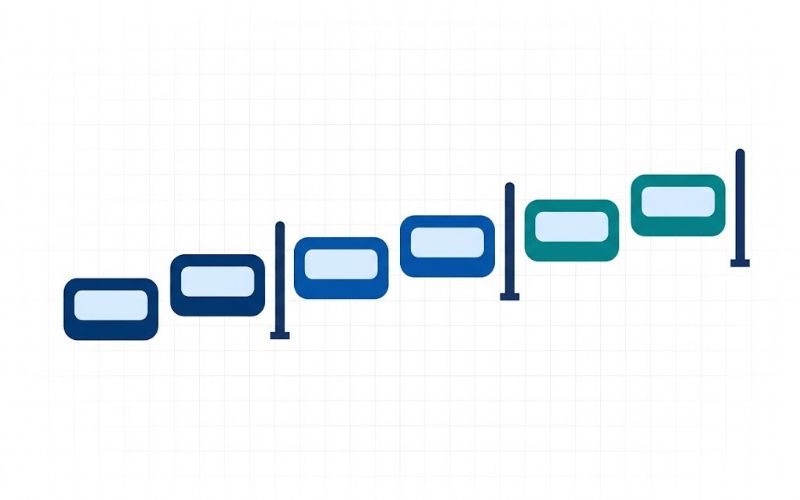
The Sprint runs in three 30-day phases. Each phase ends with a sponsor decision, so the operating partner keeps control of the investment at every step.
Days 1–30: Diagnose
- Assessment. Build the AI system register: every system, its intended purpose and its owner. Discover shadow AI. Baseline maturity, data readiness, and current cost and cycle times.
- Company DNA. Structured leadership interviews capture how the business actually works and which value-creation plan lines AI must move.
- Knowledge Gap Analysis. Map data, skills and governance gaps, then score use cases by EBITDA impact against complexity.
Gate 1: continue, redirect or stop. The diagnostic stands on its own.
Days 31–60: Govern
- Core Framework. Stand up the governance council, AI policy, RACI and production gates. Review AI vendor contracts. Apply the US governance module.
- Growth Pathway & Strategy. Set the 12-month roadmap and select two use cases with KPIs, owners and production gates.
Gate 2: the sponsor approves the two use cases and the governance framework.
Days 61–90: Prove
- AI Workflows. Take the two use cases into production, quality-check outputs before release, report KPIs, and present the data-room governance pack to the board.
Gate 3: ongoing retainer, portfolio roll-up, or handover to an internal leader.
What an operating partner sees at Gate 1
The 30-day diagnostic answers the five questions an operating partner asks before backing any AI initiative:
- Which value-creation plan line does it move? Cost takeout, revenue enablement, or risk and speed, named for each use case.
- What is the baseline? Current cost, cycle time and error rate, measured before anything is piloted.
- Is the data ready? An honest verdict on data access, quality and ownership, with the cost to fix it.
- Who owns it? One accountable business owner per use case, with the authority to stop it.
- How will the board track it? Leading indicators, reported separately from realized value.
Start with the diagnostic
A 30-minute scoping call confirms fit, the value-creation plan lines in play, and pricing for your company.
Book a scoping callGovernance you can defend in the data room
The Sprint includes a US governance module that turns Texas law and the NIST frameworks into evidence. Its engine is a TRAIGA–NIST crosswalk: each statutory obligation mapped to NIST AI RMF subcategories, NIST AI 600-1 suggested actions and ISO/IEC 42001 clauses, with an evidence artifact, owner and review cadence. The controls are aligned with ISO/IEC 42001; that is not a certification claim.
- Applicability memo for each AI system: developer or deployer, and which Texas nexus applies (§ 551.002).
- Prohibited-use screen against TRAIGA's prohibitions and their intent standards (§§ 552.052–552.057).
- Safe harbor evidence pack for each route in § 552.105(e).
- Cure playbook and written cure-statement template for the 60-day cure period (§ 552.104).
- Privacy and biometrics inputs for Texas data protection assessments (§ 541.105(a)(3)) and a biometric data inventory (§ 503.001).
Why the safe harbor matters. Under Tex. Bus. & Com. Code § 552.105(e), a defendant may not be found liable if it discovers a violation through, among other routes, testing that includes adversarial or red-team testing, or substantial compliance with the most recent NIST Generative AI Profile (or another recognized AI risk management framework) plus an internal review process. The Texas Attorney General has exclusive enforcement authority (§ 552.101).
For the full statutory picture, see our TRAIGA compliance guide and the US AI governance framework. This is general information, not legal advice; the company's own counsel makes legal determinations.
What your fractional CAIO delivers, and what your team builds
The split keeps accountability clear: the fractional chief AI officer leads and governs; the company's team builds. Every deliverable is an artifact the sponsor can put in the data room.
| Phase | Delivered by the fractional CAIO | Built by your team, governed by the CAIO |
|---|---|---|
| Days 1–30 | AI system register; shadow-AI findings; maturity and ROI baseline; gap register; use-case matrix; interim acceptable-use policy; diagnostic report | Access to systems and data owners; leadership interviews |
| Days 31–60 | Governance charter and AI policy; RACI; production gates; vendor contract review; US module evidence pack; 12-month roadmap | Pilot builds for the two selected use cases |
| Days 61–90 | KPI dashboard; output quality gate; data-room governance pack; ISO/IEC 42001 alignment gap; board presentation; successor hiring profile | Production release of the two use cases |
KPI targets are set from the day-30 baseline, not promised up front. They cover savings run-rate or hours redirected, inference cost per workflow, pilot-to-production cycle time and the share of AI use through approved tools.
How remote fractional AI leadership works

The Sprint is delivered remote-first from Australia, which works in the company's favor.
- Live overlap: 3:00–5:30 p.m. US Central time, Monday to Thursday. Work done overnight is waiting at the start of the Texas day.
- Security: work happens inside your systems, in a share folder in your Microsoft 365 or Google Workspace under a guest account you control and can revoke. Nothing is stored on devices in Australia. Production or personal data is reached only through your virtual desktop or access gateway, or de-identified first.
- Cadence: weekly CEO and CTO sessions, a weekly AI steering session, and a fortnightly operating partner update.
- Texas visit: one on-site visit for the board presentation.
Who leads the Sprint
Matthew Bulat is a former CTO who now works as a fractional chief AI officer and AI strategy leader. He founded Expert AI Prompts, is CTO of Consultancy Done Differently, and authored the TRAIGA–NIST crosswalk that powers the US governance module. Read Matthew's profile.
Frequently Asked Questions
What does a fractional chief AI officer do?
A fractional chief AI officer leads AI strategy, governance and delivery part-time, usually 12–15 hours a week. In the AI Value & Governance Sprint that means building the AI system register, tying use cases to value-creation plan lines, standing up governance, and taking two use cases into production in 90 days. The CAIO leads and governs; the company's own team builds.
How is a fractional CAIO different from an AI consultant?
A consultant typically recommends and leaves. A fractional CAIO holds executive accountability for outcomes: owners named, KPIs measured against a baseline, use cases in production, and governance evidence in the data room. The Sprint ends with a successor hiring profile and a handover plan, so the capability stays with the company rather than with an outside firm.
Who builds the AI use cases during the Sprint?
The company's engineering team builds, governed by the fractional CAIO. The CAIO delivers the register, policy, production gates, use-case briefs with KPIs and the quality gate. Production release of the two selected use cases depends on engineering capacity, which is confirmed at the day-30 gate before the company commits to the next phase.
How much does a fractional chief AI officer cost?
Pricing depends on scope: a standalone 30-day diagnostic, the full 90-day Sprint, or a portfolio roll-up across several companies. We confirm the scope and quote a fixed monthly fee on a 30-minute scoping call. Fees are in US dollars, cash only, with no equity, and the sponsor can stop at day 30 with a diagnostic that stands on its own.
How does the Sprint support the Texas TRAIGA safe harbor?
The US governance module builds an evidence pack for each route in Tex. Bus. & Com. Code § 552.105(e), including testing with adversarial or red-team testing, and substantial compliance with the most recent NIST Generative AI Profile plus an internal review process. It also prepares a cure playbook for the 60-day cure period under § 552.104. This is not legal advice.
What happens after the 90 days?
At day 90 the sponsor chooses one of three paths: an ongoing fractional retainer, a portfolio roll-up that applies the same governance standard across two or three portfolio companies, or a handover to an internal leader using the successor hiring profile built during the Sprint. Each path starts from a working governance program and two measured use cases.
Next step: book a scoping call
In 30 minutes we confirm fit, the value-creation plan lines in play, a start date and pricing for your company.
Book a scoping call See the US AI governance frameworkGeneral information only; not legal, tax or insurance advice.