TRAIGA: The Texas Responsible AI Governance Act, Mapped to NIST
Who TRAIGA covers, what it prohibits, the NIST-linked safe harbor and the 60-day cure, from the statute text.
Get the TRAIGA summary See the US templateTRAIGA, the Texas Responsible AI Governance Act (HB 149), took effect on January 1, 2026. It applies to companies that develop or deploy AI systems with a Texas connection, it is enforced by the Texas Attorney General, and it ties a liability safe harbor to NIST's AI risk management guidance: the Generative AI Profile (NIST AI 600-1).
This guide sets out who TRAIGA covers, what it prohibits, how the safe harbor works and the evidence a software company should keep. It is the Texas module of our US AI governance framework. General information only; not legal advice.
Disclaimer. This page is general information, not legal advice, and reading it does not create an attorney-client relationship. It summarizes the enrolled text of HB 149 as checked on October 27, 2026. Laws, rules and guidance change; consult a licensed Texas attorney before acting on it.
Who TRAIGA applies to
TRAIGA reaches a person who (§ 551.002):
- promotes, advertises or conducts business in Texas;
- produces a product or service used by Texas residents; or
- develops or deploys an artificial intelligence system in Texas.
The Act separates developers, who create an AI system offered or used in Texas, from deployers, who put an AI system into service or use in the state (§ 552.001(1)–(2)). A SaaS company is often both: it develops features and deploys them for customers.
The triggers are broad. A company headquartered outside Texas, with no Texas office, can still be covered if Texas residents use its product. For a portfolio, the safe assumption is that any company selling nationally is in scope and should hold Texas evidence.
What TRAIGA prohibits
The prohibitions are narrow and turn on intent. Two apply only to governmental entities, a point many summaries miss.
| Section | Prohibited conduct | Who it binds | Intent standard |
|---|---|---|---|
| § 552.052 | AI that manipulates people toward self-harm, harm to others or criminal activity | Any person | "Intentionally aims to incite or encourage" |
| § 552.055 | AI that infringes rights under the US Constitution | Any person | "Sole intent" |
| § 552.056 | AI that unlawfully discriminates against a protected class | Any person (insurance and federally insured financial institution provisions in § 552.056(d)–(e)) | Intent to discriminate; disparate impact alone is not enough (§ 552.056(c)) |
| § 552.057 | AI that produces or distributes unlawful sexually explicit content or deep fakes, or holds sexual text conversations while impersonating a child | Any person | "Sole intent" for visual material and deep fakes (§ 552.057(1)); "intentionally" for sexual text conversations impersonating a child under 18 (§ 552.057(2)) |
| § 552.053 | Social scoring | Governmental entities only | — |
| § 552.054 | Biometric identification of individuals | Governmental entities only | — |
Intent-based rules change what evidence matters. A regulator testing intent will look at what the company said its AI system was for, how it was tested and what it did when problems surfaced. A written intended purpose, test records and a decision log are the best answer to an intent question.
Private companies are not bound by the TRAIGA social-scoring ban. It applies to governmental entities (§ 552.053).
Disclosure duties
Governmental agencies must disclose to consumers that they are interacting with an AI system (§ 552.051(b)). Section 552.051(f) adds a health-care disclosure provision; health-care and health-tech companies should confirm its scope with counsel.
The TRAIGA liability safe harbor
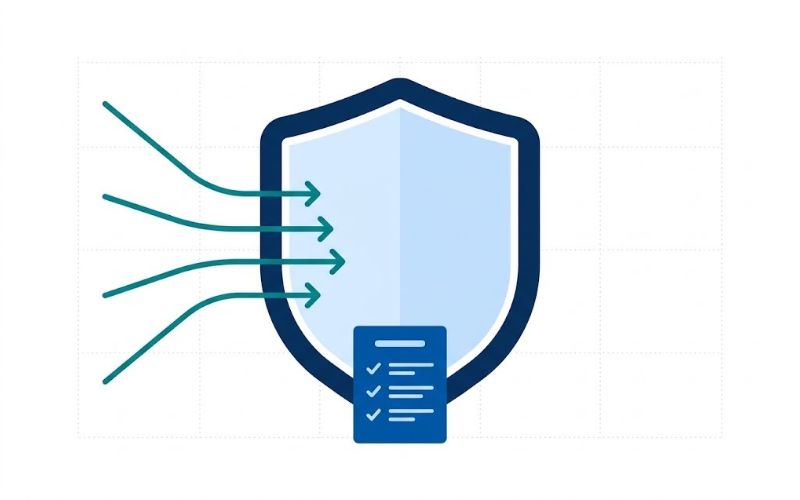
Section 552.105(e) is the provision that makes NIST matter in Texas. A defendant is not liable if (1) another person misused the AI system in a way the Act prohibits, or (2) the defendant discovered the violation through:
- feedback from a developer, deployer, or other person who believes a violation has occurred;
- testing, including adversarial or red-team testing;
- following guidelines set by applicable state agencies; or
- substantial compliance with the most recent version of NIST AI 600-1, the Generative AI Profile, or another nationally or internationally recognized AI risk management framework, together with an internal review process.
Of the four routes, the NIST route is the one a company can build in advance. Feedback and testing depend on finding a specific problem; a documented program aligned with AI 600-1, with a working internal review process, is in place before anything goes wrong.
Separately, "there is a rebuttable presumption that a person used reasonable care as required under this chapter" (§ 552.105(c)).
Evidence for each route
| Route | Evidence to keep |
|---|---|
| Feedback | Intake log for customer, partner and employee reports, with triage dates |
| Adversarial or red-team testing | Test plans, findings and fixes for each release |
| State agency guidelines | Register of guidance followed, with dates |
| NIST AI 600-1 plus internal review | Crosswalk to AI 600-1 actions; review committee minutes and sign-offs |
TRAIGA enforcement by the Attorney General
The Texas Attorney General has exclusive enforcement authority, except for the limited state-agency sanctions in § 552.106, and there is no private right of action (§ 552.101(a)–(b)). The Attorney General maintains an online complaint portal (§ 552.102).
Before suing, the Attorney General must give written notice identifying the provisions violated. No action may be brought before the 60th day after the notice, or if, within those 60 days, the company cures the violation and gives the Attorney General a written statement that it has cured it, with supporting documentation showing how (§ 552.104).
| Violation type | Civil penalty (§ 552.105(a)) |
|---|---|
| Curable violation, or breach of a cure statement | $10,000 to $12,000 per violation |
| Uncurable violation | $80,000 to $200,000 per violation |
| Continuing violation | $2,000 to $40,000 per day |
A state agency may also sanction a person it licenses, registers or certifies, including a penalty of up to $100,000, but only after the person has been found in violation under § 552.105 and the Attorney General has recommended additional enforcement (§ 552.106).
The notice-and-cure structure rewards preparation. A company that can locate the affected system, fix it and evidence the fix within 60 days keeps a curable violation in the lowest penalty band.
Get the one-page TRAIGA summary (PDF). Triggers, prohibitions, safe harbor routes and penalties on a single page for your board pack.
Get the TRAIGA summaryYour 60-day TRAIGA cure readiness
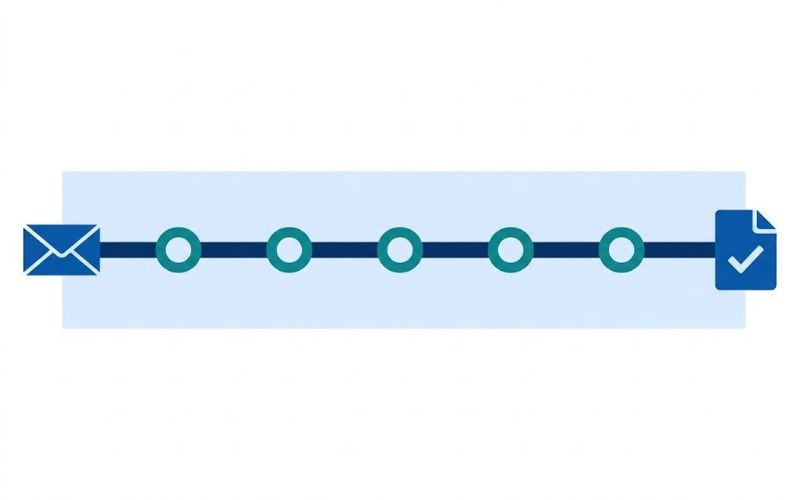
- Name the recipient. Decide who receives an Attorney General notice and how it reaches legal within a day.
- Name the investigator. Assign a technical lead to reproduce the issue and identify the affected AI system.
- Document as you go. Record findings, decisions and fixes against the AI system register.
- Prepare the cure statement. Within the 60 days, cure the violation and give the Attorney General a written statement that it is cured, with supporting documentation showing how (§ 552.104(b)(2)). Have counsel review it.
- Follow up. Confirm the fix holds, update policies, and brief the board.
The full playbook, with fill-in templates, is Document 6 of the US AI governance policy template.
Related Texas rules
- Texas Data Privacy and Security Act. A data protection assessment is required for processing personal data for profiling where the risks listed in § 541.105(a)(3)(A)–(D) are reasonably foreseeable. The processor duties in § 541.104(a)(2) also refer to AI.
- Biometric identifiers (CUBI). Bus. & Com. Code § 503.001, including subsections (b-1), (e) and (f), governs capture and use of biometric identifiers.
- Texas Department of Insurance Bulletin B-0003-26 (June 12, 2026) is guidance, not a rule: "TDI expects a person to review and agree with all decisions before action is taken."
- SB 1188 (effective September 1, 2025) adds Health and Safety Code chapter 183 on electronic health records; its § 183.005 duties fall on health-care practitioners.
Texas AI regulatory sandbox
TRAIGA creates a regulatory sandbox run by the Department of Information Resources. Approved participants can test AI systems for up to 36 months (§§ 553.051(a), 553.053(a)–(b)).
For a portfolio company with a novel AI product, the sandbox can be a way to test with regulators in the room. It is an application process, not an exemption, so the same governance evidence applies.
How TRAIGA maps to NIST
Each TRAIGA obligation becomes a row in the crosswalk, linked to the NIST AI RMF function that produces its evidence:
| TRAIGA provision | NIST AI RMF function | Evidence |
|---|---|---|
| Prohibitions (§§ 552.052–552.057) | MAP | AI system register; intended purpose; screening record |
| Safe harbor testing route (§ 552.105(e)(2)(B)) | MEASURE | Adversarial and red-team test results |
| Safe harbor NIST route (§ 552.105(e)(2)(D)) | GOVERN | AI 600-1 crosswalk; internal review minutes |
| 60-day cure (§ 552.104) | MANAGE | Cure playbook; incident log; cure statement |
The full crosswalk adds the AI 600-1 action, the ISO/IEC 42001 clause or Annex A control (aligned with, not certified), the owner and the review cadence for every row.
TRAIGA and HR technology
Workforce and HR software companies should answer three questions, ideally with counsel:
- Could any feature be developed or deployed with intent to unlawfully discriminate against a protected class (§ 552.056)? Document intended purpose and testing to show it is not.
- Do we profile employees or candidates in a way that triggers a TDPSA data protection assessment (§ 541.105(a)(3))?
- Do we capture biometric identifiers, such as face or voice data, that bring CUBI (§ 503.001) into play?
These are questions, not conclusions. The answers depend on the product and the contract.
Frequently asked questions
Does TRAIGA apply to private companies?
Yes. TRAIGA's prohibitions on manipulation (§ 552.052), infringing constitutional rights (§ 552.055), unlawful discrimination (§ 552.056) and unlawful sexually explicit content (§ 552.057) apply to any person, including private companies. The bans on social scoring and biometric identification apply only to governmental entities. Most private-sector prohibitions require intent, so documented intended purpose and testing are central evidence.
Can individuals sue under TRAIGA?
No. TRAIGA does not create a private right of action (§ 552.101(b)). The Texas Attorney General enforces the Act, apart from limited state-agency sanctions against licensees (§§ 552.101(a), 552.106), and must give written notice and a 60-day opportunity to cure before bringing an action (§ 552.104). Individuals can report concerns through the Attorney General's online complaint portal (§ 552.102).
Is disparate impact alone a violation of TRAIGA?
No. Section 552.056(c) states that a disparate impact is not sufficient by itself to demonstrate an intent to discriminate. The prohibition targets AI systems developed or deployed with the intent to unlawfully discriminate against a protected class. Other state and federal laws, such as Title VII, still apply their own disparate-impact standards.
Does the TRAIGA social-scoring ban apply to private companies?
No. The social-scoring prohibition in § 552.053 applies to governmental entities. The same is true of the biometric identification provision in § 552.054. Private companies should still check other Texas laws, including the biometric identifier rules in Business and Commerce Code § 503.001 (CUBI) and profiling assessments under the Texas Data Privacy and Security Act.
How does NIST compliance help under TRAIGA?
Under § 552.105(e)(2)(D), a defendant is not liable if it discovers a violation through substantial compliance with the most recent version of the NIST Generative AI Profile (AI 600-1), or another recognized AI risk management framework, together with an internal review process. A NIST-based program with documented reviews therefore supports one of the safe harbor routes.
Next step
Download the one-page TRAIGA summary (PDF), then work through the US AI governance policy template to build the evidence. Track federal moves on the AI Preemption Tracker.
Prefer not to sign up? Download the free AI compliance checklist (PDF).
Disclaimer: This page is general information, not legal advice, and reading it does not create an attorney-client relationship. It summarizes the enrolled text of HB 149 as checked on October 27, 2026. Laws, rules and guidance change; consult a licensed Texas attorney before acting on it.